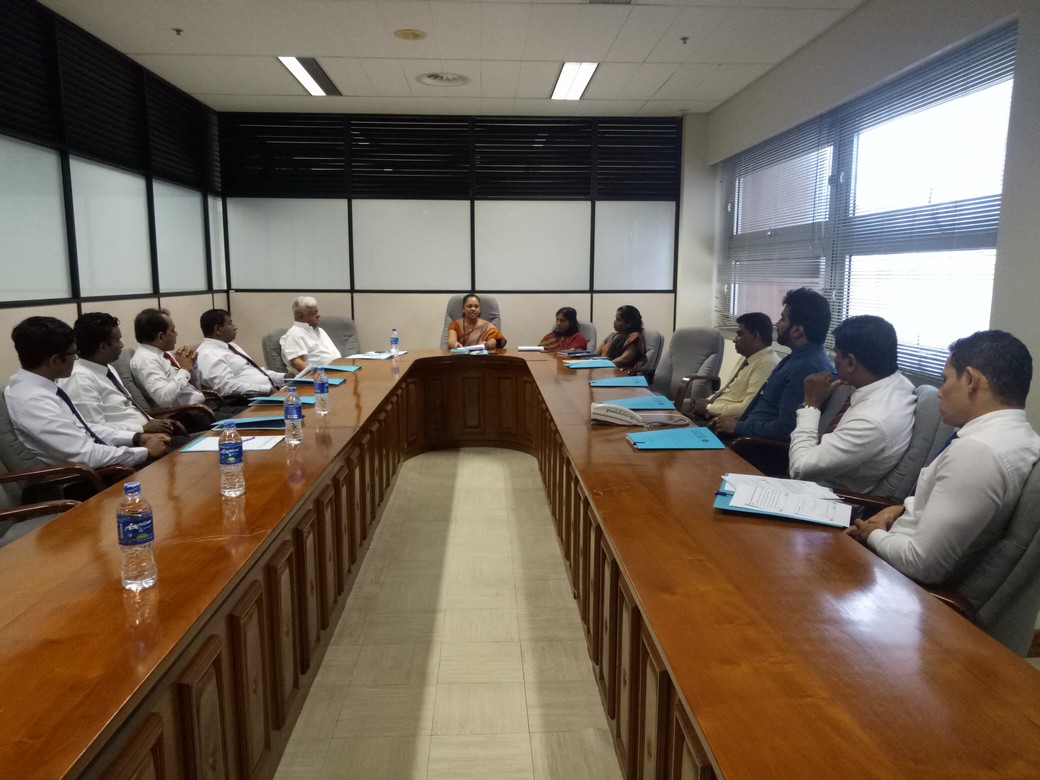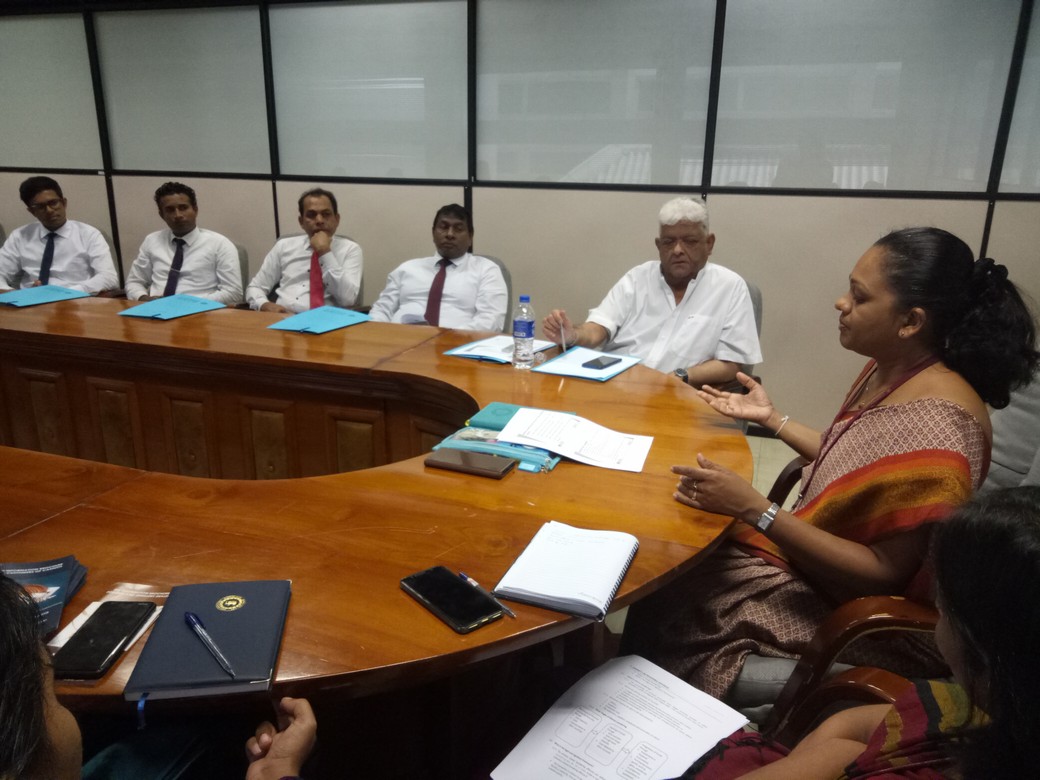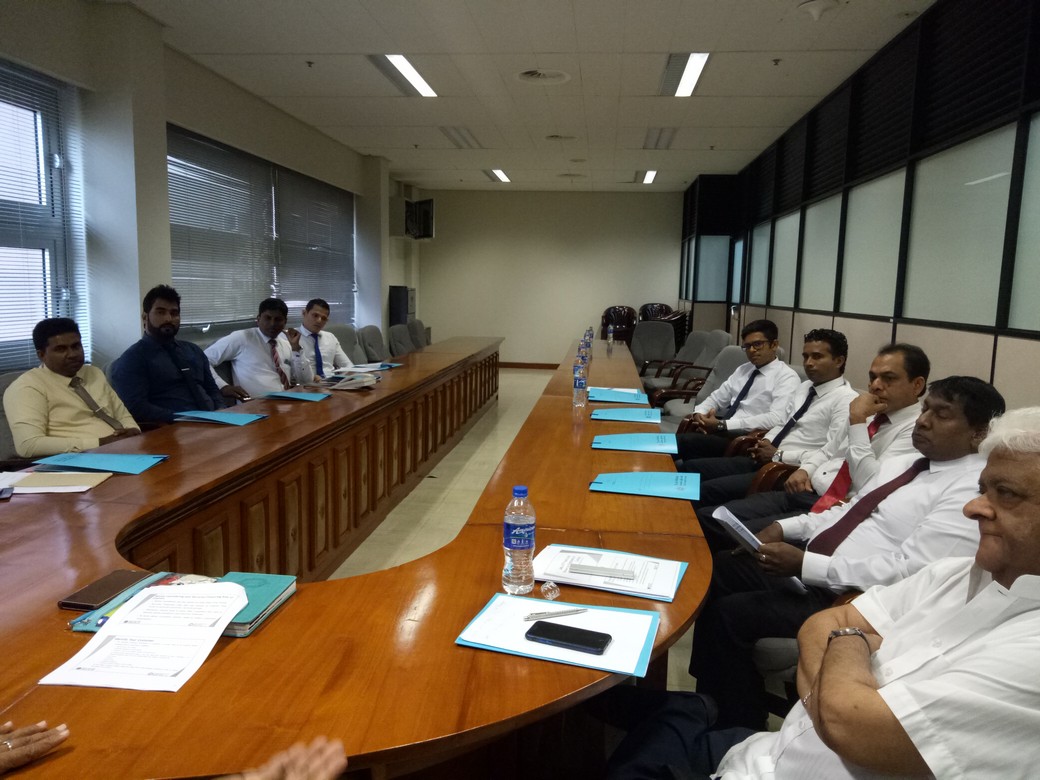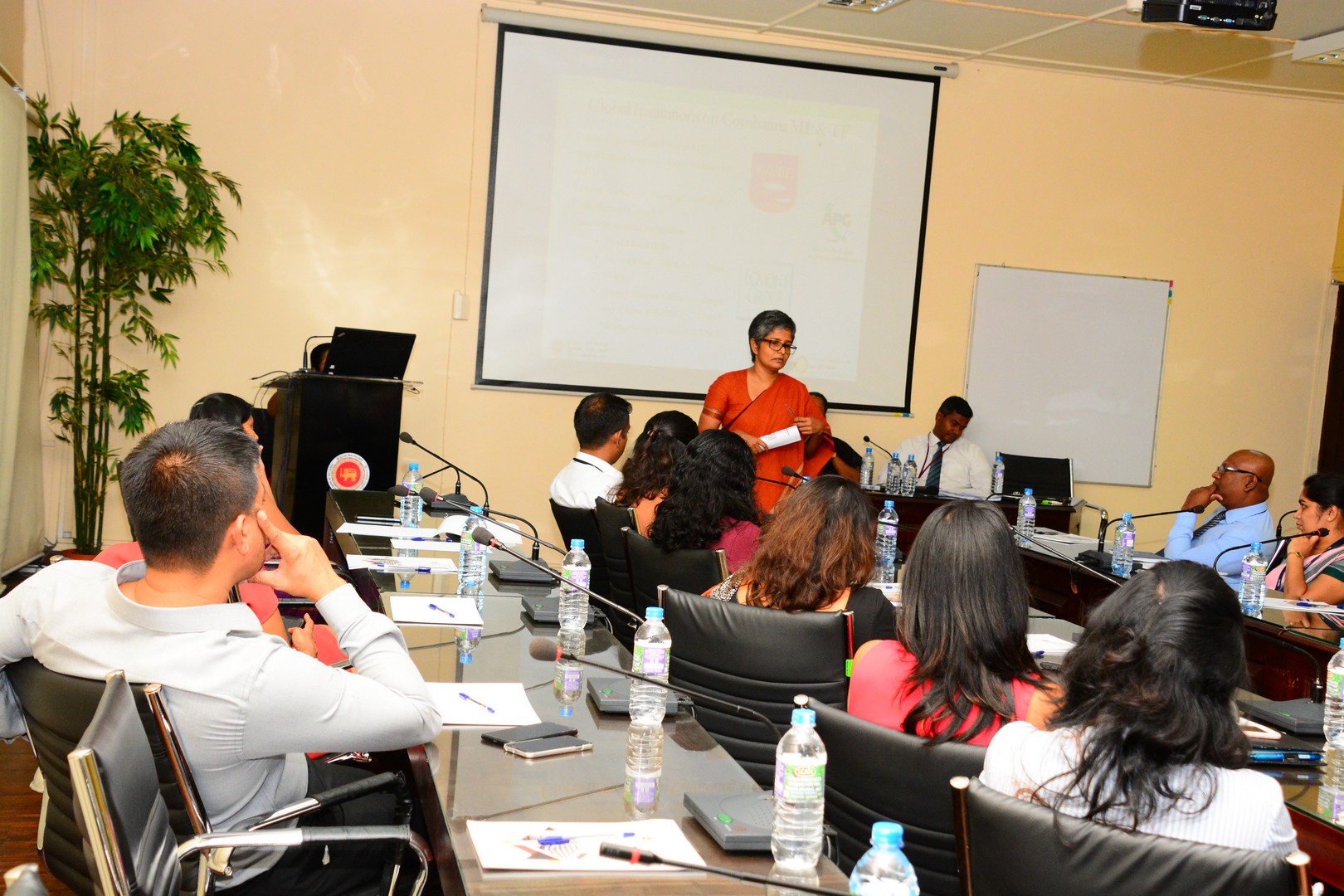
National Committee on Anti-Money Laundering, Countering the Financing of Terrorism and Financing of Proliferation of Weapons of Mass Destruction (AML/CFT/CPF)
On March 27, 2006, an Advisory Board was set up, headed by the Secretary to the Treasury with representatives from the other connected Ministries/Institutions to facilitate the policy matters of the FIU. Subsequently, with the approval of the Cabinet of Ministers, on April 12, 2007, the Governor of the Central Bank of Sri Lanka was appointed as the Chairman of the Advisory Board of the FIU to look after the policy matters of the FIU. Approval was also granted by the Cabinet of Ministers, on January 06, 2016, to implement actions recommended in the Mutual Evaluation conducted by the APG in 2015. With the introduction of the National AML/CFT Policy for 2015-2020, the Advisory Board was renamed as the AML/CFT National Coordinating Committee (NCC) from January 14, 2016.
With the enactment of the Financial Transactions Reporting (Amendment) Act, No. 17 of 2026 on August 04, 2026, AML/CFT NCC has been statutorily established as the National Committee on AML/CFT/CPF (NC), providing a strengthened governance structure for policy coordination and strategic direction in this area.
The NC is empowered to coordinate and oversee the implementation of the AML/CFT/CPF national policy of Sri Lanka and provide necessary guidance in the formulation of such national policy. The NC is comprised of 9 members, representing key agencies involved in AML/CFT/CPF activities, and the Governor of the Central Bank of Sri Lanka serves as the Chairman of the NC. The Head of the FIU acts as the Secretary of the NC.
Members of the NC
- Governor of the Central Bank – Chairman
- Secretary to the Ministry of the Minister assigned the subject of Finance
- Secretary to the Ministry of the Minister assigned the subject of Foreign Affairs
- Secretary to the Ministry of the Minister assigned the subject of Justice
- Secretary to the Ministry of the Minister assigned the subject of Defence
- Secretary to the Ministry of the Minister assigned the subject of Public Security or Internal Security
- Attorney-General
- Inspector-General of Police
- Director-General of the Commission to Investigate Allegations of Bribery or Corruption
The NC may invite to its meetings any public officer or any person whose expertise is needed to carry out its duties. Also, all Deputy Governors of the Central Bank are required to participate in the meetings of the NC.
The NC meets at minimum 4 times per annum, to discuss AML/CFT/CPF related issues, address emerging challenges, trends and concerns, review progress of national AML/CFT /CPF efforts, and provide policy directions in order to expedite the AML/CFT/CPF related activities.
Duties and Functions of the NC
- Ensure that Sri Lanka’s money laundering (ML), terrorist financing (TF), and proliferation financing (PF) risks in Sri Lanka are identified and assessed effectively, and such risk assessments are kept up to date
- Ensure that the results of risk assessments are provided to all relevant competent authorities, self-regulatory authorities, and Institutions
- Assist or advice the Cabinet of Ministers through the Minister to ensure that the national policy of Sri Lanka on AML/CFT/CPF is formulated in accordance with the risks identified, and such national policy is regularly reviewed
- Oversee the implementation of the national policy by relevant stakeholders
- Advice and guide the relevant stakeholders on the development of strategies for the implementation of national policy to control and mitigate ML/TF/PF risks in line with FATF standards
- Ensure coordination among stakeholders for the effective implementation of national policy and strategies
- Monitor progress of implementation of the national policy and strategies relating to AML/CFT/CPF, and make general or specific recommendations to the relevant stakeholders, if necessary, with timelines
- Issue general or specific directions to regulatory authority or stakeholder for the implementation of recommendations and decisions of the NC and, if necessary, specify timelines
- Make recommendations through the Minister to the Cabinet of Ministers, relating to actions, policies or strategies that may be required for combating ML/TF/PF
- Appoint sub-committees, as and when necessary, from among the members of the NC or any public officer or any other person whose expertise or knowledge is deemed necessary, to assist the NC in the performance and discharge of its duties and functions
- Submit annually, and whenever requested, reports to the Cabinet of Ministers, through the Minister setting out the progress of implementation of national policy
- Submit reports to the Cabinet of Ministers, through the Minister, on any matter on an urgent basis.